
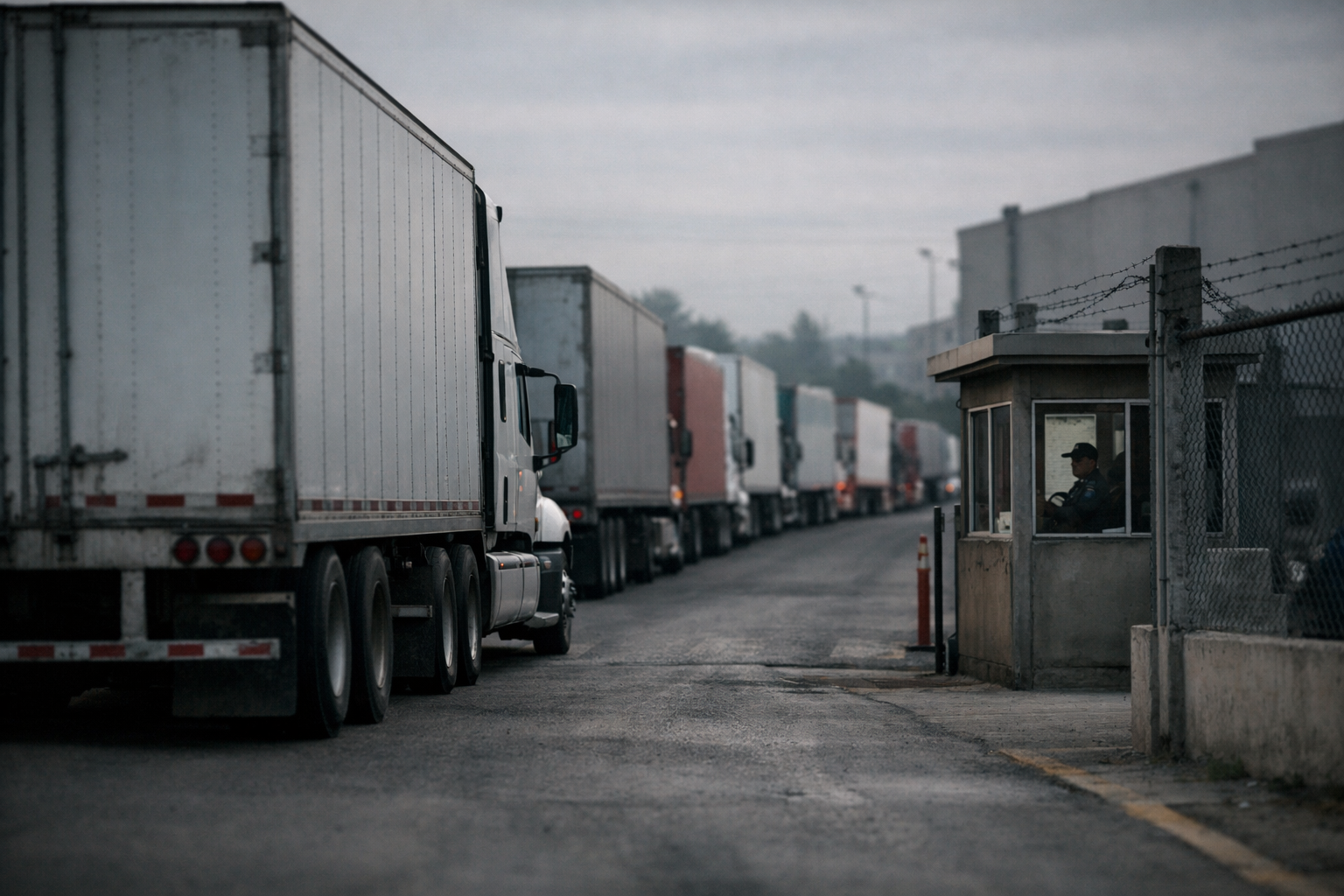
There is a number that almost no operations manager knows with precision: how much each hour of queuing costs their distribution center (DC). We are not talking about freight, warehousing, or payroll. We are talking about the "Invisible Tax" of logistics—the cost generated between the moment a truck arrives at your gate and the moment it finally starts loading or unloading at the dock.
In 2026, as nearshoring continues to push record volumes through Mexican and North American DCs, the "wait and see" approach to yard management is no longer sustainable. According to ATRI (American Transportation Research Institute), truck detention at shipping and receiving facilities represents a $15.1 billion annual economic loss in the United States alone. In Mexico, where diesel prices have surged and carrier capacity is tighter than ever, the impact is proportionally even more devastating.
If your operation receives 30 units per day and the average wait time is 2 hours, you are generating between $30,000 and $96,000 MXN daily in hidden costs. These costs never appear on a standard P&L, but they are eroding your margins every single hour.
The most visible hidden cost is the detention fee. Most carrier contracts in 2026 allow for 2 hours of "free time" for loading or unloading. Every minute beyond that is billable.
The Financial Reality:
Without a digital record of when a truck hit the gate vs. when it reached the dock, you are at the mercy of the carrier's invoice.
A truck that isn't moving is a truck that isn't making money. But in 2026, the cost isn't just about the machine; it's about the human. The industry is facing a chronic driver shortage.
McKinsey & Company reports that drivers who are consistently detained at facilities are 3x more likely to leave their carrier. When a driver spends 4 hours at your gate, they lose the ability to complete their next "leg" of the journey. This disrupts the carrier's entire network.
An idling truck burns approximately 1 gallon (3.8 liters) of diesel per hour.
A gate queue is rarely just a gate problem; it’s a symptom of a dock coordination failure.
In regions where logistics security is a high priority, like Mexico's "Tred Diamond" area, a truck parked outside a secure perimeter is a sitting duck.
If your check-in process is manual (clipboard and radio), each unit takes roughly 12-15 minutes to process.
The Problem: A major snacks manufacturer in Central Mexico was seeing queues of up to 25 trucks every morning between 7:00 AM and 9:00 AM. Their average dwell time was 5.2 hours. They were paying over $450,000 MXN per month in detention fees.
The Solution: They implemented a digital gate portal and dock appointment scheduling. Carriers were required to book a window 24 hours in advance.
The Results:
If you want to regain control, here is how Docklyx transforms your gate from a bottleneck into a data-driven entry point:
Instead of "first come, first served," you provide your carriers with a self-service link. They must book a slot based on your actual warehouse capacity.
When the driver arrives, they don't get out of the truck to talk to a guard with a clipboard. They show a QR code from their phone (or a printed sheet).
The moment the truck is checked in, the warehouse supervisor sees it on their screen. They can prioritize the load based on the cargo's urgency.
In 2026, the data is clear: the cost of your trucks waiting in a queue is far higher than the cost of the technology required to eliminate it. As McKinsey notes, the productivity gap between the "digital leaders" and the "analog laggards" is growing by 30% every year.
The queue at your gate isn't an inevitable part of logistics; it’s a choice. You can choose to keep paying the "Invisible Tax," or you can choose to take control of your yard.
Is your DC ready to move to the fast lane?
Stop the queues—Get a 14-day Free Trial of Docklyx → Calculate your hidden costs with our ROI Tool → Learn how digital check-in improves security →
Docklyx digitizes the entire yard: appointments, check-in, docks, and real-time traceability.
Request free demo →One email per week. No spam.
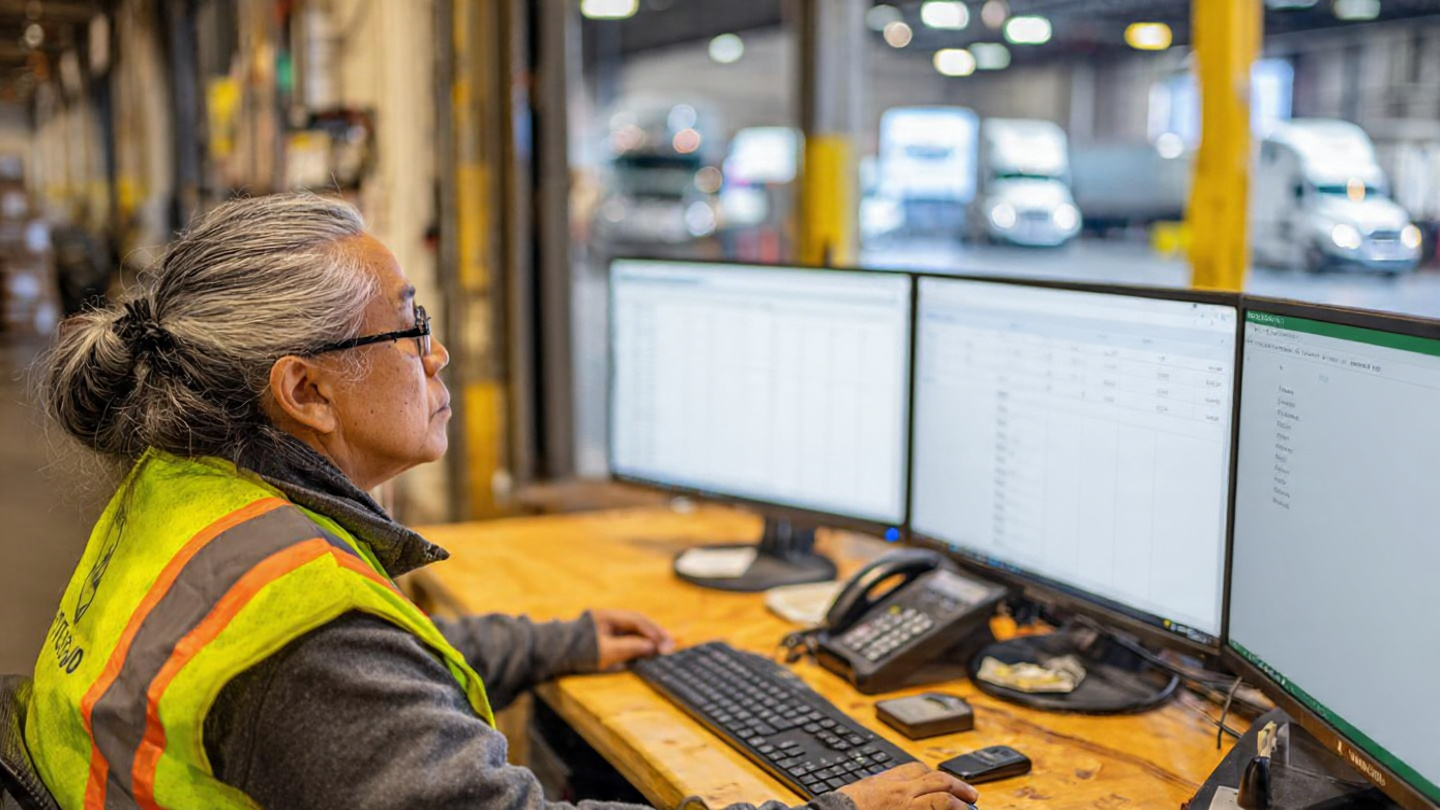
Your coordinator spends 3 hours a day on the phone with carriers. Here's how to eliminate those 50 daily calls without replacing a single carrier.
If your trucks are arriving at 5 AM to secure a spot, your system is training them to do it. Here's how to break the FCFS cycle at your DC.
Every blocked dock can cost your warehouse $48,000 to $62,000 MXN per month in labor, delays, and lost capacity. Calculate your real loss.