

If your trucks are arriving at 5 AM to secure a spot at your dock, it is not because your carriers are unusually punctual. It is because your system is training them to do it.
That is how first come, first served works: whoever arrives first gets in first. It sounds fair in theory. In practice, when you have more than 20 trucks a day and fewer than 10 doors, it becomes a race that everyone loses. Every carrier optimizes for early arrival. Everyone shows up before the gate opens. And the shift starts with the chaos already installed.
Most content about FCFS is written for drivers or freight brokers, explaining what it means for hours-of-service rules or detention billing. This piece is for the person on the other side of the gate: the warehouse or distribution center manager who owns the cost of that truck queue every morning and has been absorbing it as a fixed part of operations.
FCFS does not get fixed by disciplining carriers. It is a design problem at the shift level. The operation does not have an arrival system, it has the absence of one, and that absence shows up every shift in teams that start late, receiving staff that is never ready, coordinators running the first two hours in reaction mode, and docks that never reach their real capacity.
In the first article of this series we calculated that an 8-dock operation with 20% of trucks arriving outside their window loses between $48,000 and $62,000 MXN per month in labor, penalties, and the domino effect across the shift. FCFS is the mechanism that produces exactly that result. This piece explains why, and how the cycle breaks.
In a first-come, first-served model, the most rational decision for any carrier is to arrive before everyone else.
It is not poor discipline, it is operational math. If there are 12 trucks in line when the gate opens at 7 AM, the last six probably will not get processed in the morning shift. A carrier who has experienced that once learns fast: arrive at 5 and you secure your slot; arrive at 7 and you wait, or come back tomorrow.
What follows is always the same: carriers arrive earlier, the queue forms earlier, you need gate staff present before the shift officially starts, and the shift begins under pressure before it has technically begun. A sign on the gate that says "trucks not accepted before 7 AM" changes nothing without a real operational consequence behind it.
The pattern in operations without appointments is easy to observe: unscheduled arrivals cluster into the first hours of the shift, far beyond what receiving can process in real time. It is a wave no receiving team can absorb without extra cost, and one that repeats every day because nobody changed the system generating it.
FCFS does not create one problem. It creates several, all connected.
Without an appointment, the receiving team has no idea what is coming or when. When the truck arrives, receiving finds out at the same time as the guard. The team is not ready: the receiving area is not cleared, the unloading equipment is not staged, nobody knows whether the load needs cold chain handling.
The result: the truck backs into the dock, but unloading does not start immediately. The position is occupied longer than necessary. The next truck waits. The shift falls behind before the first one has even finished.
When trucks arrive unannounced and docks are uncontrolled, the coordinator spends the first hours of the shift solving things by phone. We already quantified that cost in the article on eliminating the daily carrier call cycle: roughly $4,800 MXN per month in coordinator time alone, not counting the errors and missing trail that verbal coordination produces.
Those calls are the symptom, not the cause. The cause is that without appointments, there is no structured information available before the truck arrives, and the call ends up being the emergency mechanism that replaces the system nobody ever built.
When a dock blocks at 8 AM because unloading took longer than expected (receiving was not ready, the load type was unexpected, assignment took too long), that delay does not stay in that dock. It hits the 9 AM slot, the 10 AM slot, and the end-of-shift close. We already calculated what that cascade costs: between $48,000 and $62,000 MXN per month when 20% of trucks miss their window. FCFS is the mechanism that guarantees that percentage never comes down.
This is the least visible consequence of FCFS, but it is equally expensive: when there are no appointments, real operational planning is nearly impossible.
Without arrival visibility, you cannot:
All of that information exists in reality. You just do not have it in advance. You discover it when the truck is already at the gate. And then you can only react.
Without appointments, the daily load pattern in most operations looks the same: high congestion in the first two to three hours, underused docks in the afternoon, and a shift close that always runs late trying to recover what the morning gave up. That pattern is not random. It is what happens when every carrier optimizes their arrival independently, without an assigned window spreading them across the day.
The 2025 MHI Annual Industry Report shows that 55% of supply chain leaders identify real-time visibility as their top technology investment priority. The logic is direct: without advance visibility there is no real control, and without control there is no planning worth the name.
If you recognize this pattern, the next step is putting a number to it. The Docklyx ROI calculator lets you estimate what morning congestion is costing with your own facility data.
A consumer goods distribution operator running 7 doors and roughly 38 trucks per day was attributing late shift closes and internal complaints to "unprofessional carrier behavior." The early-morning queue was consistent, between 8 and 12 trucks waiting when the guard arrived at 7 AM. The coordinator was spending the first two hours of every shift on the phone assigning docks one by one.
When the team mapped the shift in detail, the picture looked different:
They implemented a self-scheduling portal and set one clear operational rule: trucks arriving before their window wait in the external buffer area without priority. The pattern changed in under two weeks. The early-morning queue disappeared. The coordinator recovered the two hours lost to reaction mode every morning. Late closes went from norm to exception.
The problem was not the carrier. It was the system training them.
Moving from FCFS to appointments changes more than the order of arrival, it changes who controls the shift.
With appointments, the shift sequence looks like this:
No early-morning queue. No congestion stacked into the first hours. No late close as a default.
The shift stops starting by putting out fires and starts executing what was already planned. Receiving has what it needs before the first truck arrives: what is coming, when it gets there, and where it is going.
If you want to see the gate flow in more detail, the article on digital gate check-in explains how QR validation works in under 30 seconds. And for a structured comparison of FCFS against scheduled appointments across different volume thresholds, dock scheduling vs first-come-first-served covers when each model stops working.
It is the most common objection. It is also the one that meets the least real resistance when the system actually works.
Carriers do not arrive at inconvenient times because they want to cause problems. They arrive when the system they face pushes them to do so. Change the system and behavior changes with it, in practice faster than most managers expect.
Forcing adoption is the wrong frame. The right frame is flipping the incentive:
With that rule in place, no persuasion campaign is needed. Two or three carriers need to experience the difference between arriving with an appointment and arriving without one. The following week they are all asking for the portal link.
In operations that have documented this transition, adoption reaches 90% within the first 7 days and close to 100% before day 15. The incentive does the work on its own: arriving on time stops being the inferior option.
If you need to make the case upward for implementing an appointment system, the most effective argument is not the technology. It is the cost of the status quo.
FCFS, at its core, is the absence of policy. When there is no arrival rule, the operation hands control of when trucks enter to the random order in which they choose to show up. Every morning starts the same way: the queue already formed, the coordinator already in reactive mode, receiving already behind, and the first two hours already compromised.
That cost lands every single day, not in one obvious budget line but spread across overtime, idle labor, penalties, and throughput the facility did not process. The total, using the base model from this series, runs between $48,000 and $62,000 MXN per month.
An appointment system gets sold as logistics software, but in practice it is an operational policy with technology behind it: the difference between a warehouse that controls its own rhythm and one that responds to whatever the queue decides.
Moving from FCFS to appointments is less a technical problem than an evidence problem. The operation has spent years absorbing the morning chaos as ambient noise, and leadership will want numbers before signing off on any process change. These are the specific metrics worth instrumenting from day one to document the before and after.
Under FCFS, the queue starts forming two to three hours before gate opening. With appointments live, the first truck should arrive within 15 minutes of its assigned window. Track it daily and chart it week over week for an immediate picture of the behavior shift.
In systems without appointments, this number simply does not exist. From the first week with appointments live, it should sit above 60%, and above 90% within four weeks. If it stalls below 70%, the operational rule is not being enforced at the gate.
This KPI captures whether receiving is actually preparing in advance. Under FCFS, it typically runs 35 to 50 minutes. With appointments and pre-planned dock assignment, it should drop below 15 minutes within two weeks.
Most operations do not measure this, but it is the metric that best represents the reactive load of the shift. Capture it with a simple tally for one week before and one week after. The drop is typically 70% or more.
The final test. If the system works and the team is prepared, real facility capacity increases without adding docks or staff. A 15% to 25% lift in trucks processed with the same infrastructure is the normal range once the morning queue and the domino effect are eliminated.
Docklyx does not force carriers to change their behavior. It changes the system that trains them.
With the self-scheduling portal, the carrier books their window from any browser, with no app to install, no account to create and no password to remember. They pick the date, the time window and the cargo type. The system confirms whether capacity is available. If the window is full, no appointment is issued for that slot and the carrier picks another.
Dock assignment happens automatically based on real availability and cargo type. That eliminates both verbal last-minute assignment and the double-booking conflicts that plague shared spreadsheets.
At the gate, the guard sees who is arriving in the next 30 minutes on a live screen. When the truck arrives, the guard scans the QR and the entry is logged with an exact timestamp, with no radio, phone or paper involved. Dock release is automatic when the truck exits, and the next appointment already knows its window is open.
What most managers report in the first week is not "more order" in the abstract. It is a shift where receiving starts prepared, the coordinator is not in reaction mode for the first two hours, and late closes stop being the default.
If your facility still runs without appointments, you already have a cost reference from this series.
Take your numbers to the Docklyx ROI calculator: number of docks, trucks per day, percentage arriving outside the window, and average wait time per truck. The output will show in pesos what currently looks like a daily inconvenience.
Or start a 21-day free trial and measure the change with real data from your own facility instead of estimating it. No credit card. No hardware. No consultants. The first shift already looks different.
FCFS is not a system. It is what happens when you do not have one.
Docklyx digitizes the entire yard: appointments, check-in, docks, and real-time traceability.
Request free demo →One email per week. No spam.

Your coordinator spends 3 hours a day on the phone with carriers. Here's how to eliminate those 50 daily calls without replacing a single carrier.
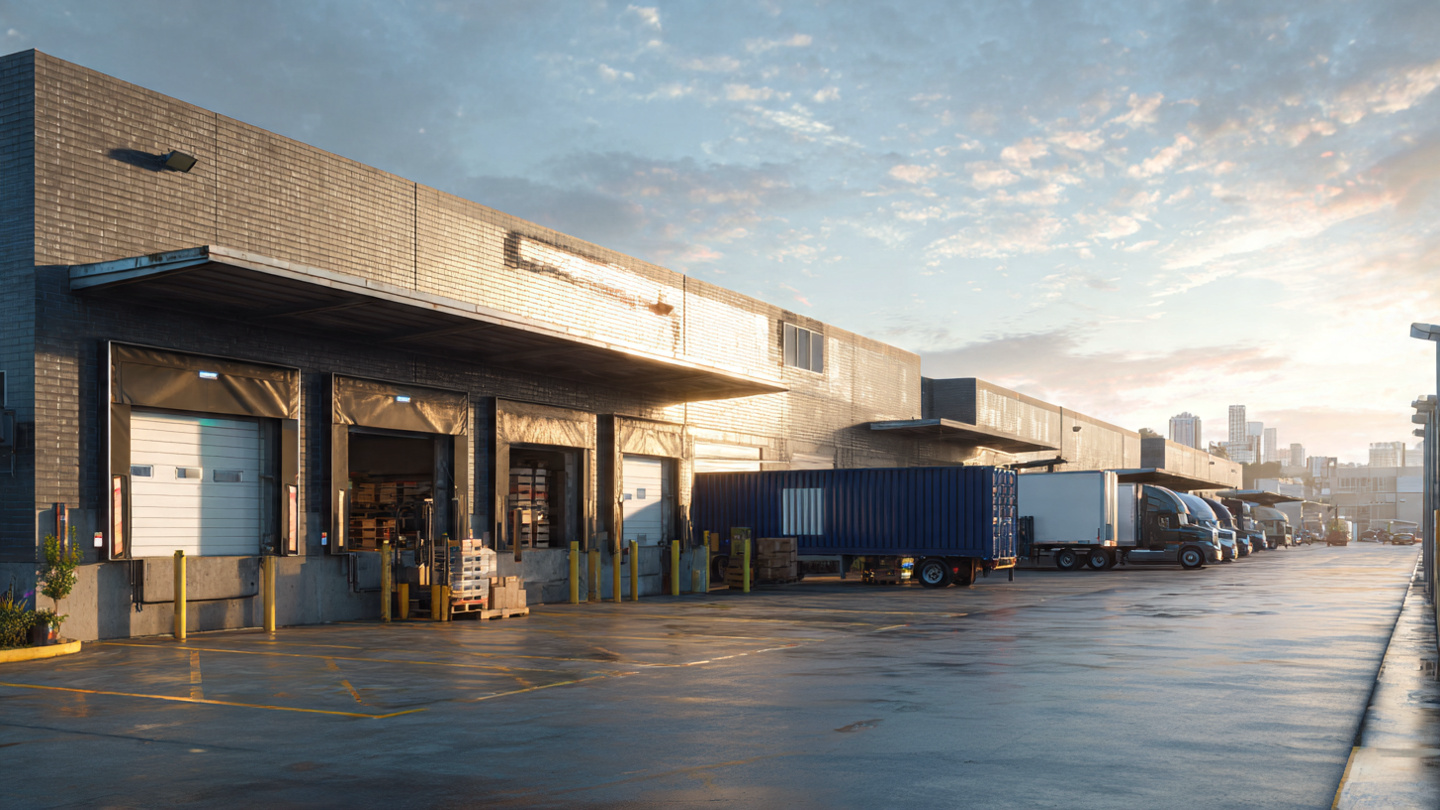
Every blocked dock can cost your warehouse $48,000 to $62,000 MXN per month in labor, delays, and lost capacity. Calculate your real loss.
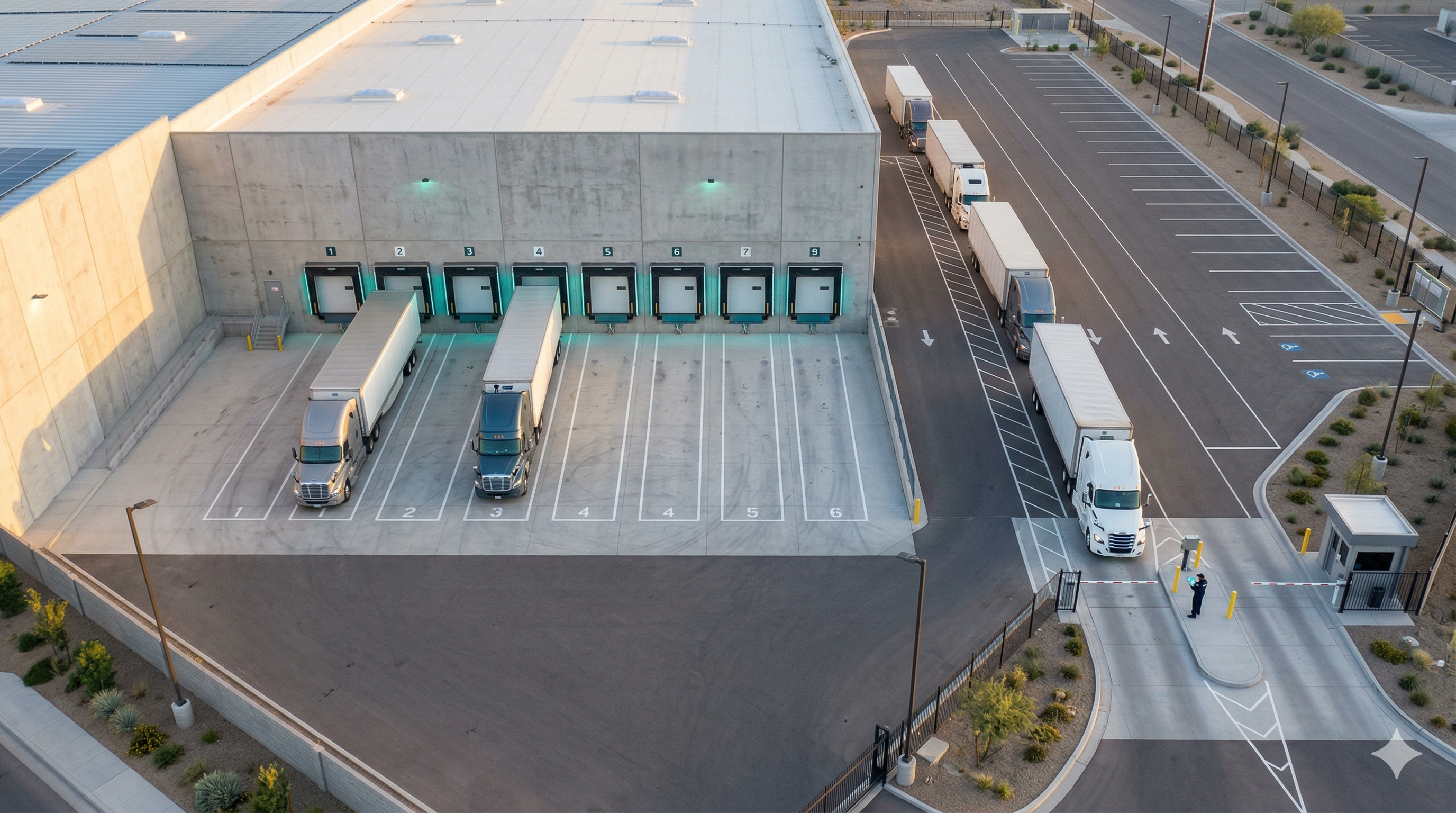
Implement dock appointment scheduling at your warehouse. Step-by-step guide covering time windows, policies, check-in, and measurement.